


Meta Description:
Discover the 6 major types of placer gold deposits—from Alluvial to Coastal. Learn their formation, how to identify them, and the best processing methods to maximize recovery.
—
Placer gold mining has triggered history’s biggest gold rushes, from the Yukon to California. But not all placer deposits are created equal. Understanding the genesis (formation) and characteristics of the 6 different types of placer gold is the difference between a profitable mine and a waste of time.
Whether you are a prospector or a mining engineer, knowing if you are dealing with alluvial, glacial, or residual gold dictates the equipment you need.
This guide breaks down the 6 distinct types of placer gold deposits and the specific processing strategies for each.
⚡ Quick Comparison: The 6 Placer Gold Types
This table is designed to help you quickly identify your deposit type.
| Placer Type | Formation Force | Gold Shape | Sorting | Best Processing Method |
| 1. Residual | Weathering (in-situ) | Angular / Sharp | Poor | Simple Gravity & Scrubbing |
| 2. Colluvial | Gravity (Slope) | Slightly Rounded | Poor | Scrubbing & Gravity |
| 3. Alluvial | River Flow | Flat / Rounded | Good | Sluicing, Jigs, Centrifuges |
| 4. Fluvial | Flash Floods | Angular / Sub-rounded | Mixed | Scrubbing & Jigging |
| 5. Glacial | Glaciers | Angular / Striated | Very Poor | Aggressive Scrubbing & Gravity |
| 6. Coastal | Ocean Waves | Very Fine / Rounded | Excellent | Spirals & Shaking Tables |
—
1. Residual Placer Gold Deposits
” The Source Gold”
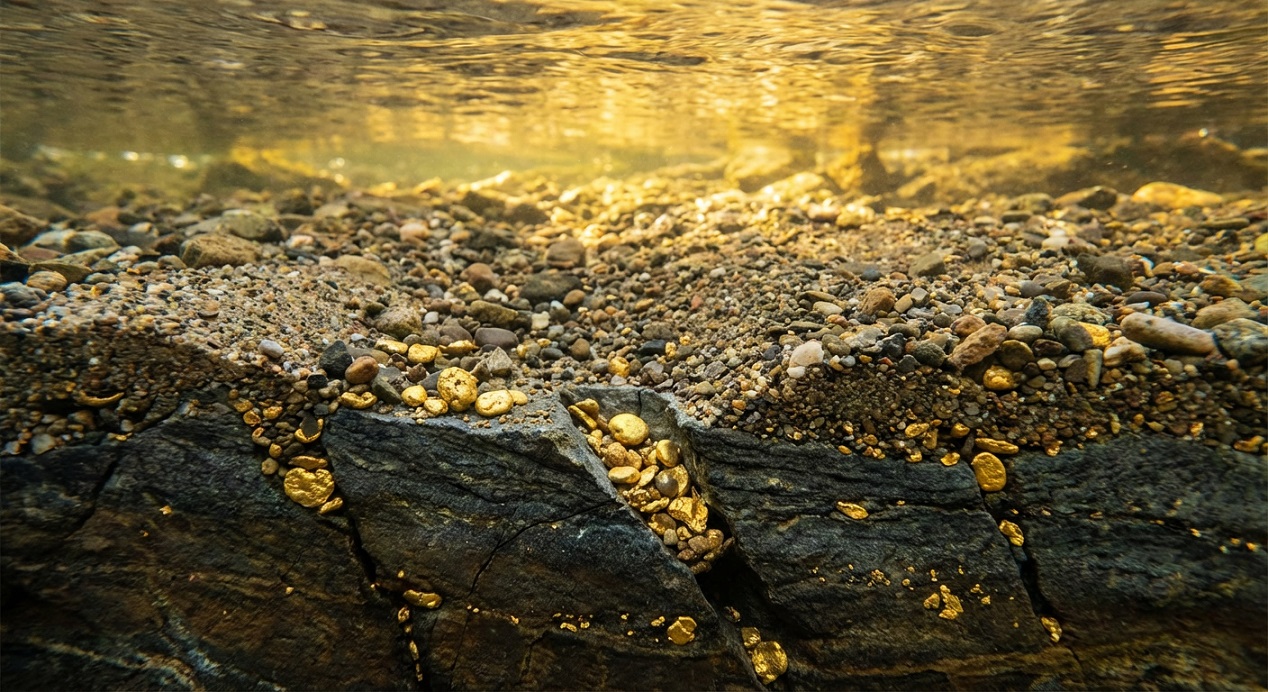
These deposits are the closest you will get to the original gold vein (lode). They form when the host rock weathers away, leaving the gold particles sitting almost exactly where they started.
Genesis: Weathering of primary ore bodies (veins) without transport.
Key Characteristics:
- Shape: Unrounded, sharp, and angular edges.
- Composition: Often found with quartz fragments from the original vein.
- Grade: High grade but typically small volume.
Typical Location: Steep mountain slopes or directly on top of outcrops.
Processing Strategy:
- Since the material is sticky and unsorted, washing is crucial.
- Equipment: Rotary Scrubbers to break up clay → Jigs or Shaking Tables for recovery.
2. Colluvial Placer Gold Deposits
“The Slope Deposits”
Gravity is the main driver here. As residual gold moves slightly downhill due to rain wash or creep, it becomes a Colluvial deposit.
Genesis: Short-distance transport down a slope due to gravity.
Key Characteristics:
- Shape: Slight rounding but still rough.
- Structure: Found in fan shapes or bands at the base of slopes.
- Sorting: Poorly sorted; mixed with clay and rock debris.
Typical Location: Base of hills or valley slopes (e.g., foothills of the Urals).
Processing Strategy:
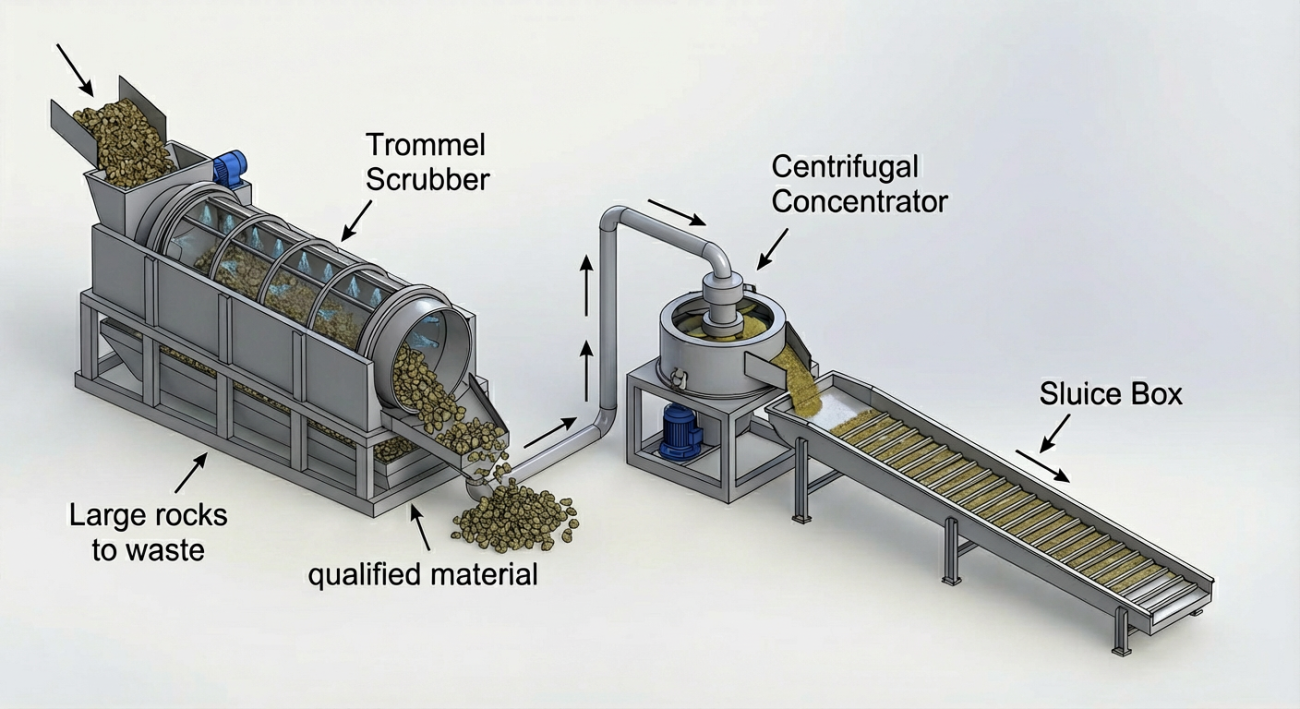
- Requires strong scrubbing to separate gold from clay-rich slope soil.
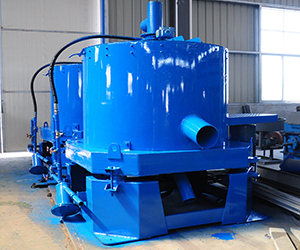
- Equipment: Trommel Scrubbers followed by Centrifugal Concentrators (like Knelson/Falcon) for fine gold recovery.
3. Alluvial Placer Gold Deposits
“The Gold Rush Standard”
This is the most common and commercially significant type. Rivers act as nature’s sluice box, transporting and sorting gold over long distances.
Genesis: Continuous water flow sorts and deposits gold in riverbeds, floodplains, or ancient terraces.
Key Characteristics:
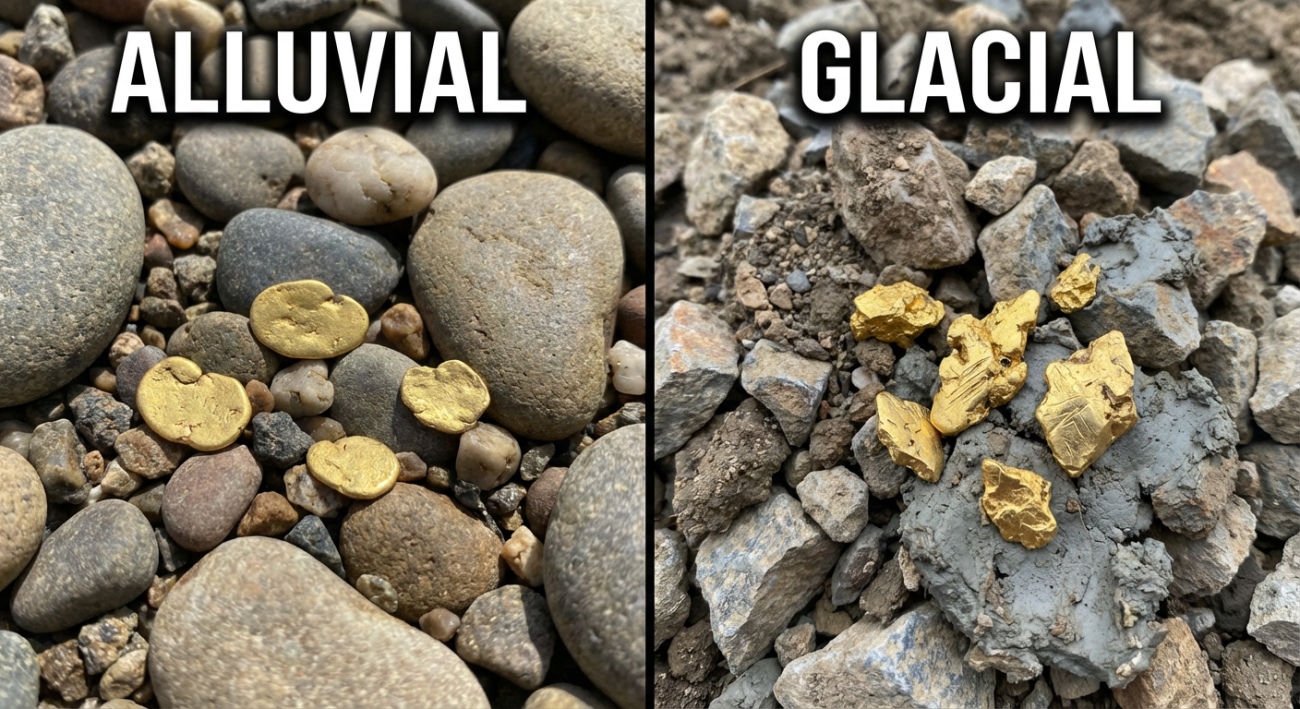
- Shape: Highly rounded, often flattened into flakes or “grains.”
- Concentration: Gold settles at the bottom of gravel layers (bedrock).
- Scale: Can be massive industrial-scale deposits.
Typical Location: River bends, ancient river channels (paleochannels), and floodplains (e.g., Yukon River).
Processing Strategy:
Because nature has already sorted the material, recovery is efficient.
Equipment: Trommel Screens for sizing → Sluice Boxes for coarse gold → Shaking Tables for final cleanup.
—
4. Fluvial Placer Gold Deposits
“The Flood Gold”
Unlike the steady flow of alluvial deposits, fluvial placers are born from violence—torrential rains and seasonal flash floods.
Genesis: Rapid, short-distance transport by high-energy water events.
Key Characteristics:
- Shape: Angular to sub-rounded; rarely flattened.
- Sorting: Very poor; gold is mixed with large boulders and sand.
- Distribution: Erratic “nuggety” distribution.
Typical Location: Alluvial fans in arid or semi-arid regions (desert gold).
Processing Strategy:
- The mix of large boulders and fine gold makes screening difficult.
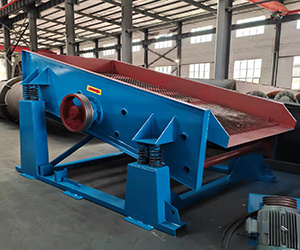
- Equipment: Heavy Duty Grizzly Feeders → Jigs (to handle variable feed rates).
—
5. Glacial Placer Gold Deposits
“The Ice Transported”
Glaciers are powerful bulldozers. They scrape up gold and rock and dump them together in unsorted piles called till or moraine.
Genesis: Ice sheets transport gold-bearing rock and leave it behind when they melt.
Key Characteristics:
- Shape: Angular, often with scratches (striations) from grinding against rock.
- Structure: No layering; gold is suspended randomly in sticky clay and gravel.
- Difficulty: High. Gold is hard to predict and hard to wash.
Typical Location: Northern Europe, Canada, and historic ice age zones.
Processing Strategy:
- Aggressive Scrubbing is non-negotiable to break up the glacial clay.
- Equipment: High-pressure Log Washers or Trommel Scrubbers are essential before any gravity separation.
—
6. Coastal (Marine) Placer Gold Deposits
“The Beach Sands”
Ocean waves are the ultimate grinder. Over thousands of years, they pulverize rock and concentrate the heaviest minerals on the shore.
Genesis: Wave action and coastal currents concentrate gold and heavy minerals (black sands).
Key Characteristics:
- Shape: Extremely fine, rounded, and smooth particles.
- Association: Almost always found with black sands (Magnetite, Ilmenite, Zircon).
- Structure: Thin layers (cross-bedding) on modern or ancient beaches.
Typical Location: Nome, Alaska; New Zealand West Coast.
Processing Strategy:
- Gravity separation must be tuned for ultra-fine particles. Sluice boxes often fail here.
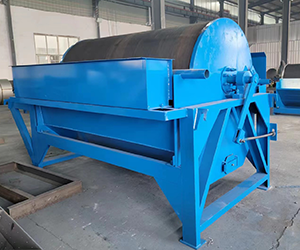
- Equipment: Spiral Concentrators are the standard, followed by Shaking Tables and Magnetic Separators to remove the black sand.
—
Conclusion
From the jagged nuggets of a Residual deposit to the microscopic dust of a Coastal beach, the type of placer gold you are mining dictates your success.
- Mining in the mountains? Prepare for clay and scrubbing (Residual/Colluvial).
- Mining a river? Focus on high-volume screening (Alluvial).
- Mining the beach? Gear up for fine gold recovery (Coastal).
Ready to set up your mine?
Whether you need a simple sluice box for alluvial sands or a complex trommel scrubber for glacial clays, choosing the right equipment starts with understanding your deposit.